
India Nears Approval for Safran-DRDO Jet Engine Project to Power AMCA Fighters

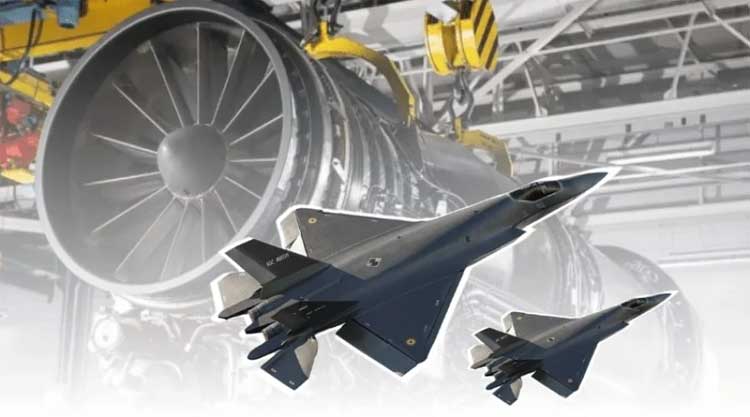
India is poised to clear a landmark joint project with French aerospace major Safran S.A. and the Defence Research and Development Organisation’s Gas Turbine Research Establishment (GTRE) to co-develop a new fighter jet engine, officials familiar with the matter told HT.
The project, expected to be greenlit soon, will see the development of a 120-kilonewton (KN) thrust engine to power India’s indigenous twin-engine Advanced Medium Combat Aircraft (AMCA). Over 12 years, nine prototypes are planned, with thrust capacity scaling up to 140 KN.
The move comes weeks after Prime Minister Narendra Modi used his Independence Day address to call for indigenous development of jet engines, highlighting the strategic importance of reducing dependence on foreign suppliers. Defence Minister Rajnath Singh has also signaled that India is preparing to embark on this critical task.
Full Technology Transfer from France
Officials said Safran will transfer 100% of the technology to DRDO under Indian intellectual property rights, including advanced single-crystal blade technology — crucial for producing high-powered, heat-resistant jet engines. While DRDO has made progress in crystal blade research, adapting it for modern fighter aircraft remains a major challenge.
The Safran-GTRE collaboration had been under discussion for two years but gained fresh momentum after the government pressed DRDO to submit a concrete proposal.
Strategic Leap for AMCA and Naval Fighters
The AMCA program, led by Indian private industry — including Tata, L&T, and Adani Defence — will rely on the new engines. The Indian Navy’s planned twin-engine deck-based fighter is also expected to be powered by the Safran-GTRE design, giving India long-term autonomy for its frontline combat aircraft.
Currently, India depends on foreign suppliers for jet engines. US major GE is supplying 212 F-404 engines and has agreed to partial technology transfer (around 70%) for the heavier F-414. By contrast, France has offered complete transfer — an assurance reinforced by its history of strategic reliability, including continued support after India’s 1998 nuclear tests.
Global Context
Only a handful of countries — the US, Russia, the UK, and France — possess the ability to independently design and produce advanced fighter jet engines. Even China remains reliant on Russian imports or reverse-engineered models. India’s earlier attempt with the indigenous Kaveri engine failed to meet requirements, underscoring the importance of the new collaboration.
With Safran already powering India’s Rafale fleet with its M-88 engines, officials say extending cooperation to the AMCA program is a logical step. A successful 120–140 KN engine program would significantly reduce India’s vulnerability to foreign suppliers and mark a transformative leap in its aerospace capabilities.
Comments are closed.