
COP30 in Brazil: Advancing Intersectional Climate Justice and Historical Reparations

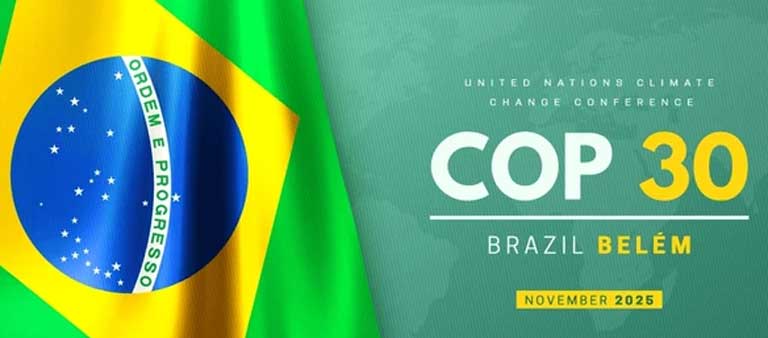
In Brazil—and across the Global South—it is impossible to address the climate crisis without confronting environmental racism, gender inequality, and class injustice.
These are not peripheral concerns; they are structural. Similarly, discussions on gender-based violence cannot ignore intersectionality: while violence affects all women, its severity is shaped by race, sexuality, social class, and geographic location.
According to Brazil’s Ministry of Health, over 60% of reported violence against women involves Black women. The 2025 Atlas of Violence shows that more than 68% of women murdered in 2023 were Black. Brazil also leads globally in killings of trans women, particularly young Black women from the Northeast. These figures reveal not only systemic racism and patriarchal violence but also how overlapping forms of oppression affect Afro-descendant women’s daily lives.
Black women represent roughly 30% of Brazil’s population—around 60 million individuals. In favelas, where over 16 million people live, women are the majority. These communities face historical neglect, state absence, and acute vulnerability to climate impacts. Black women experience water scarcity, extreme heat, food insecurity, limited mobility, and threats from floods and landslides. Yet, they are often the first to organize community responses, providing food, care, and protection, while being the last to benefit from public policies or international aid.
The omission of fair, equitable public policies perpetuates racial and gender inequalities. The care and leadership provided by these women is not optional—it is imposed—and must be recognized as both labor and a collective responsibility.
The Paris Agreement turns ten this year. Between 2020 and 2023, over 80% of Brazilian municipalities faced disasters linked to extreme weather, yet over 66% have low adaptive capacity, highlighting the unequal distribution of resources and vulnerability. Climate change acts as a multiplier of injustice: those historically marginalized suffer first and hardest.
If COP30 is to achieve meaningful progress, it must embed racial and gender justice at the core of climate governance. UNFCCC tools like the Global Goal on Adaptation, National Adaptation Plans, the Just Transition Work Programme, and the Gender Action Plan must account for the unequal realities of the Global South, and include Afro-descendant populations, Indigenous peoples, women and girls, local and traditional communities, and historically neglected areas.
As host of the next COP, Brazil has an ethical responsibility to ensure that the conference’s process and outcomes are inclusive. Civil society, social movements, youth groups, traditional peoples, and Black women who have historically resisted oppression must be central to decision-making. Initiatives like the Black Women’s March exemplify this leadership and highlight the importance of their inclusion.
COP30 should be more than a transitional agenda—it should mark a commitment to historical reparations and equitable climate governance. This includes strengthening data collection disaggregated by race, gender, location, and class, and ensuring genuine participation and power for historically excluded communities.
Belém, in the heart of the Amazon, must signal a new global pact: a climate agenda that recognizes unequal impacts and delivers solutions fairly and equitably. Climate justice in Brazil—and globally—must be intersectional, feminist, anti-racist, and grassroots-led. Black women will no longer be made invisible, and COP30 has the opportunity to reflect that truth.
Comments are closed.