
Drones Turn Ukraine’s Front Line Into Deadly Kill Zone, Hampering Medical Evacuations

At a front-line medical post in Donetsk, quiet nights are fragile. Medics jolted awake rush to meet another stretcher pushed down the dim corridor. They work frantically — chest compressions, shouted commands — until silence falls and the soldier is zipped into a white bag.
“He couldn’t be saved,” said anesthesiologist Daryna Boiko of the Ulf medical service, “because evacuation took too long. By the time he reached us, he was already dead.”
It is a story repeated too often in a war where medical evacuation has become increasingly perilous.
Evacuations in the kill zone
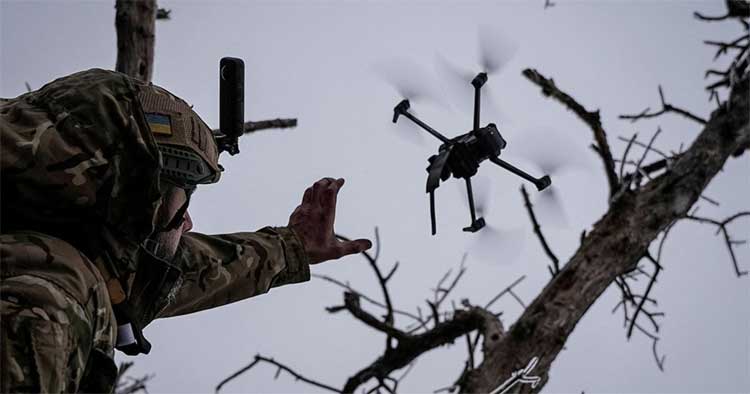
In the early months of Russia’s full-scale invasion, ambulances could approach near the front, boosting survival chances. Now, swarms of first-person-view (FPV) drones — precision-guided and lethal up to 20 kilometers from the front — have turned evacuation routes into kill zones.
“Everything is getting harder,” said the commander of the 59th Brigade’s medical unit, call sign Buhor. “The work has to be more mobile. Mortality has increased significantly. There’s nothing you can do. FPVs burn everything — even tanks.”
The drones, armed with rocket-propelled grenade charges, tear through armor and vehicles with molten jets of metal, causing catastrophic injuries. Medics say gunshot wounds have all but vanished; nearly every case now stems from drone strikes.
Survival depends on self-aid
With evacuation crews often unable to reach them, soldiers are increasingly trained to save themselves.
Artem Fursov, 38, was hit by shrapnel from a drone strike on Aug. 4. He didn’t make it to a stabilization post until five days later, after walking kilometers with a bandaged arm wrapped by a comrade. “You can’t even lift your head there,” he said. “This is already a robot war.”
Another soldier, 25-year-old Valentyn Pidvalnyi, wounded in the back, described infantry life now as more brutal than month-long deployments in 2022. “If you don’t destroy them, they’ll take the tree line, then the town, then the whole region,” he said.
Forced to keep moving
Medical teams themselves are targets. Buhor’s unit has relocated 17 times since late 2022, always retreating under the buzz of FPV drones.
Boiko remembers when gunshot wounds still arrived at her post — a sign of trench fighting. Now, almost all injuries are from drones. To survive, medics camouflage vehicles, rely on electronic warfare systems, and wear body armor even during evacuations.
“We try to safeguard both ourselves and the wounded,” she said. “But if we move farther back, the route becomes longer — and for the critically injured, that can be fatal.”
Comments are closed.