
SC Cites Pahalgam Attack, Seeks Centre’s Reply on Plea for Time-Bound Restoration of J&K Statehood

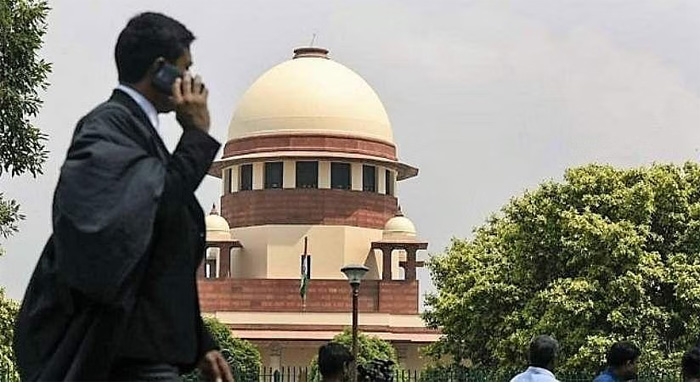
The Supreme Court on Thursday cited the April 22 Pahalgam terror attack while stating that it was the government’s prerogative to assess ground realities, as it sought a response from the Centre on a plea demanding time-bound restoration of statehood to Jammu and Kashmir (J&K).
The application, filed through advocate Soyaib Qureshi, seeks restoration of statehood within a fixed time frame, preferably two months. The petitioners, an academician and a social activist, argue that prolonged Union Territory status “violates the idea of federalism,” which is a basic feature of the Constitution, and that peaceful assembly and Lok Sabha elections have shown there are no security impediments.
A bench of Chief Justice of India Bhushan R Gavai and Justice K Vinod Chandran issued notice on the application, posting it for hearing after two months.
During the Thursday hearing, senior advocate Gopal Sankaranarayanan, appearing for applicants Zahoor Ahmad Bhat and Khurshaid Ahmad Malik, read from the Supreme Court’s December 2023 judgment on the abrogation of Article 370 to argue that the court had refrained from deciding the statehood issue only because the solicitor general had assured it would be restored after elections.
“Based on the submissions of the union, the court was not drawn into answering that question because an assurance was given. Restoration of statehood was to be done after elections. It has been 21 months since that judgment. Our plea says it should be done within two months, but this court may fix any proper timeline and we will accept it,” he said.
Solicitor general Tushar Mehta, for the union government, opposed the plea, calling it “not maintainable” and contending that “there are several considerations” in such decisions. “The elections were held. This stage is not the correct stage to muddy the water. I am not sure why this issue is being raised at this point. Put it after eight weeks,” he submitted.
The bench replied to Sankaranarayanan, “You also have to take into consideration ground realities, and you cannot ignore what happened in Pahalgam in April. We do not possess all the expertise and there are some decisions to be made by the government.”
On August 5, 2019, Parliament abrogated Article 370, which had granted special status to J&K, and bifurcated the state into two Union Territories — J&K and Ladakh. A five-judge Constitution bench on December 11, 2023, upheld the move as a valid exercise of presidential power, ruling that Article 370 was always intended to be temporary and calling it “the culmination of the process of integration” of J&K with India. While refraining from ruling on the constitutional validity of the reorganisation into UTs, the court recorded the Centre’s assurance that statehood would be restored “at the earliest” and directed that assembly elections be held by September 2024.
Elections were held in three phases between September 18 and October 1, 2024, leading to the formation of a National Conference–Congress alliance government, with Omar Abdullah sworn in as chief minister.
The legal development came amid renewed political speculation over the Centre’s plans for the Union Territory. On August 4, Abdullah fuelled the chatter with a post on X, expressing a “gut feeling” of being “optimistic” about “something positive” for J&K during Parliament’s ongoing monsoon session.
Earlier this month, Abdullah wrote to the presidents of 42 political parties, including Congress chief Mallikarjun Kharge, urging them to press the Centre to introduce legislation during the ongoing monsoon session of Parliament to restore statehood.
The three terrorists who shot dead 25 tourists and a pony operator on April 22 at Baisaran meadow in Pahalgam were killed by the security forces on July 28 in the Dachigam forest area. The union home minister confirmed in Parliament on July 29 and 30 that the terrorists were from Pakistan and belonged to Lashkar-e-Taiba (LeT).
India launched Operation Sindoor on May 7 in response to the Pahalgam attack. During the pre-dawn strikes, Indian forces bombed nine terrorist camps in Pakistan and Pakistan-occupied Kashmir (PoK), reportedly killing at least 100 terrorists. This action sparked a series of attacks and counter-attacks, including the use of fighter jets, missiles, armed drones, and heavy artillery. On the night of May 9–10, the Indian Air Force targeted 13 Pakistani airbases and military installations. The fighting lasted for four days before military hostilities ceased on the evening of May 10, following an understanding reached by both nations.
Comments are closed.