
Trump, Putin to Meet in Alaska — a Former Russian Territory with Enduring Ties

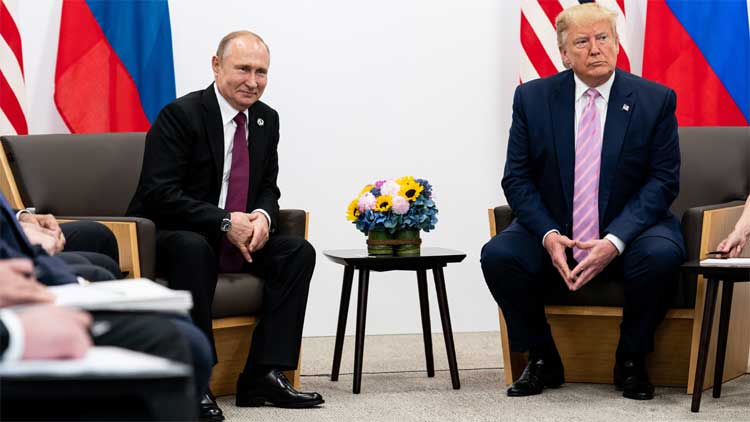
Presidents Donald Trump and Vladimir Putin will meet Friday in Alaska for high-stakes talks on the Ukraine war — in a state the United States bought from Russia over 150 years ago.
Russian influence still lingers in parts of this remote, northwest corner of North America, separated from Russia by only a few miles across the Bering Strait.
That strait was first charted in 1728 by Danish explorer Vitus Bering, sailing for Tsarist Russia. His voyage revealed Alaska to the West, though Indigenous peoples had lived there for millennia. The discovery sparked a century of Russian seal and sea otter hunting, with the first colony established on Kodiak Island. In 1799, Tsar Paul I created the Russian-American Company to profit from the fur trade, often clashing with Indigenous communities. Overhunting decimated animal populations — and the settlers’ economy.
Facing declining fortunes, Russia sold Alaska to Washington in 1867 for $7.2 million, an area more than twice the size of Texas. Many Americans mocked the deal as “Seward’s folly,” after U.S. Secretary of State William Seward, who negotiated it.
Some Russian legacies endure. The Russian Orthodox Church, introduced during the colonial era, still has more than 35 churches across Alaska — many with onion-domed spires. The Orthodox diocese, the oldest in North America, even runs a seminary on Kodiak Island. A Russian-based dialect once spoken near Anchorage has largely disappeared, but on the Kenai Peninsula, Russian is still taught at a small Orthodox “Old Believers” school established in the 1960s.
Alaska’s proximity to Russia famously entered U.S. politics in 2008 when then-governor Sarah Palin said, “You can actually see Russia from land here in Alaska” — a claim true only from Little Diomede Island, just 2.5 miles from Russia’s Big Diomede.
The Bering Strait remains a geopolitical flashpoint. In 2022, two Russians landed on Alaska’s St. Lawrence Island seeking asylum after fleeing Putin’s military mobilization. U.S. forces routinely intercept Russian aircraft near the region, though Putin himself once dismissed the idea of reclaiming Alaska, quipping in 2014 that it is “too cold.”
Comments are closed.