
Dismantling the Red Corridor: Amit Shah’s Campaign to End India’s Naxalite Threat

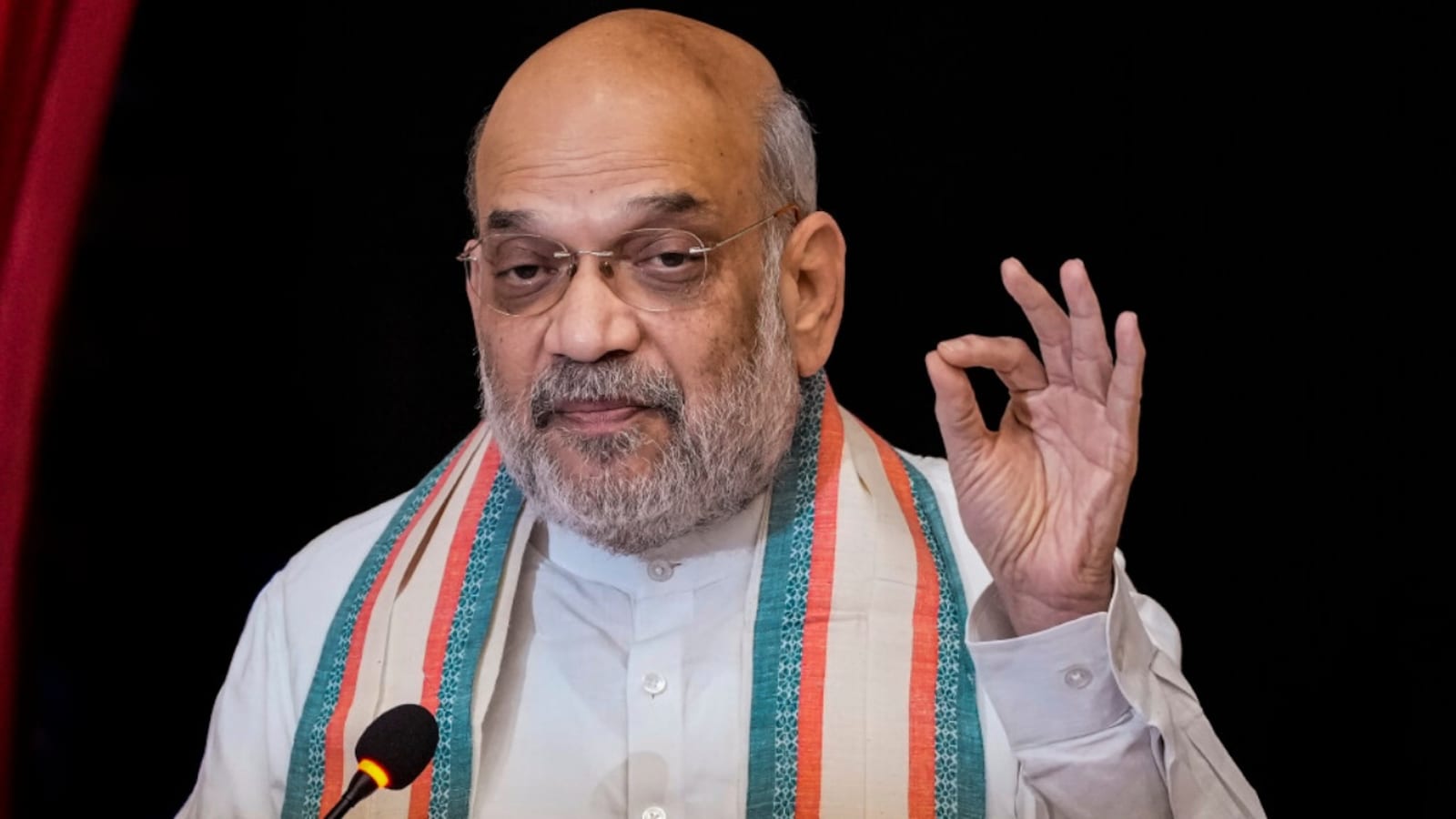
The Naxalite-Maoist insurgency, often described as India’s most persistent internal security threat, has plagued the nation for over five decades, with its influence once stretching across a vast “Red Corridor” from Nepal’s border to southern India. By 2025, however, this once-formidable rebellion has been significantly diminished, largely due to a multi-pronged offensive led by Union Home Minister Amit Shah. Through a combination of targeted security operations, developmental initiatives, and unwavering political resolve, Shah’s strategy has reduced the insurgency’s footprint to just 18 districts, with only six classified as “most affected.” This article examines the fall of the Red Corridor, the key elements of Shah’s approach, and the broader implications for India’s internal security and tribal communities.
The Red Corridor: A Historical Overview
The Naxalite insurgency began in 1967 with the Naxalbari uprising in West Bengal, a peasant rebellion inspired by Maoist ideology advocating armed struggle for land rights and social justice. The movement, led by figures like Charu Mazumdar, splintered from the Communist Party of India (Marxist) to form the Communist Party of India (Maoist) in 2004, consolidating various factions into a potent force. At its peak in the late 2000s, the insurgency affected nearly 180 districts across 20 states, covering 92,000 km², and was labeled by then-Prime Minister Manmohan Singh in 2006 as India’s “single biggest internal security challenge.”
The Red Corridor, spanning states like Chhattisgarh, Jharkhand, Odisha, Bihar, Maharashtra, Andhra Pradesh, and West Bengal, became a hotbed of Left-Wing Extremism (LWE). The region’s dense forests, rugged terrain, and socio-economic underdevelopment provided ideal conditions for Maoists to establish strongholds, particularly in the Dandakaranya forests of Chhattisgarh. The insurgency thrived on grievances such as tribal displacement, land alienation, and lack of governance, mobilizing Adivasi (indigenous) communities and landless laborers. By 2010, violent incidents peaked at 1,936, claiming 1,005 lives, including the devastating Dantewada ambush that killed 76 Central Reserve Police Force (CRPF) personnel.
The Maoists aimed to create a “liberated zone” from Pashupati (Nepal) to Tirupati (Andhra Pradesh), challenging the Indian state through guerrilla warfare, extortion, and attacks on security forces and infrastructure. Their armed wing, the People’s Liberation Guerrilla Army (PLGA), was equipped with small arms, improvised explosive devices (IEDs), and, in some cases, sophisticated weapons like AK-47s and light machine guns, often acquired through illicit networks, including alleged ties with groups like the Liberation Tigers of Tamil Eelam (LTTE).
Amit Shah’s Strategic Offensive: A Game-Changer
Since the Bharatiya Janata Party (BJP)-led National Democratic Alliance (NDA) government came to power in 2014, the fight against Naxalism has shifted from containment to decisive elimination, with Union Home Minister Amit Shah driving a comprehensive strategy since 2019. Shah’s approach, encapsulated in the SAMADHAN framework (Smart Leadership, Aggressive Strategy, Motivation, Actionable Intelligence, Dashboard-based KPIs, Harnessing Technology, Action Plan, and No Access to Financing), combines robust security operations with developmental outreach to address both the symptoms and root causes of the insurgency. His public commitment to eradicate Naxalism by March 31, 2026, has galvanized coordinated efforts between central and state governments, significantly shrinking the Red Corridor.
Key Security Operations
-
Operation Kagar (May 2025): A landmark operation in Chhattisgarh’s Abujhmad region, Operation Kagar neutralized 27 Maoists, including Nambala Keshava Rao (alias Basavaraju), the general secretary of CPI (Maoist) and a key architect of the 2010 Dantewada ambush. Conducted over 50 hours, the operation destroyed the Maoists’ unified headquarters in Karregutta hills, disrupting arms manufacturing and training. Described by Shah as “the most decisive strike” in three decades, it demoralized Maoist cadres and breached their last major stronghold in Bastar.
-
Operation Sankalp (April 2025): Involving 24,000 security personnel, this operation in Chhattisgarh killed 26 Maoists and destroyed hundreds of bunkers, further weakening the insurgency’s infrastructure.
-
Operation Black Forest (May 2025): This operation resulted in 54 arrests and 84 surrenders, signaling a collapse in Maoist morale. The use of surrendered rebels to navigate difficult terrain, as seen in the Gundekot village encirclement, enhanced operational success.
These operations reflect a shift from the defensive posture of the early 2000s, when forces were confined to camps due to IED threats and ambushes, to an offensive strategy. Improved intelligence-sharing, modernized equipment, and coordination between central paramilitary forces (532 companies deployed) and state police have been pivotal. The BJP’s 2023 electoral victory in Chhattisgarh, installing Vishnu Deo Sai as chief minister and Vijay Sharma as state home minister, further strengthened inter-governmental alignment.
Developmental Initiatives
Shah’s strategy goes beyond military action, addressing the socio-economic drivers of Naxalism. The Red Corridor’s underdevelopment—marked by poverty, lack of infrastructure, and tribal marginalization—has long fueled Maoist recruitment. Key initiatives include:
-
Road and Telecommunication Networks: Over the past decade, road connectivity in LWE-affected areas has improved by 40%, with 5,000 km of roads built in Chhattisgarh alone. Mobile networks now cover 80% of previously isolated regions, reducing the Maoists’ tactical advantage.
-
Civic Action Programs: Central Armed Police Forces (CAPFs) have implemented programs to build trust with tribal communities, such as medical camps and skill development workshops.
-
Roshni Scheme: This initiative has trained over 10,000 tribal youth in skills like agriculture and IT, providing employment and reducing vulnerability to Maoist recruitment.
-
Panchayats (Extension to Scheduled Areas) Act (PESA) and Forest Rights Act (FRA): These laws empower tribal communities by granting land rights and local governance, addressing grievances like displacement due to mining.
These efforts have restored faith in governance, with civilian casualties dropping from 71 in 2024 to 20 in 2025, reflecting more precise operations and reduced collateral damage.
Territorial and Statistical Success
The Red Corridor’s geographic scope has contracted dramatically. From 126 districts in 2013, the number of LWE-affected districts fell to 90 in 2018, 70 in 2021, 38 in 2024, and just 18 by March 2025, with only six districts—Bijapur, Kanker, Narayanpur, and Sukma in Chhattisgarh, West Singhbhum in Jharkhand, and Gadchiroli in Maharashtra—classified as “most affected.” Violence has also declined sharply:
-
Incidents: From 1,936 in 2010 to 374 in 2024, a 75% reduction.
-
Casualties: Civilian and security force deaths fell from 1,005 in 2010 to 150 in 2024.
-
Surrenders and Arrests: Over 2,000 Naxalites surrendered in the 18 months leading to July 2025, with thousands more arrested or neutralized.
The CPI (Maoist), the largest Maoist group, has been decimated, with its leadership crippled by the loss of figures like Basavaraju, who carried a ₹1.5 crore bounty.
Challenges and Criticisms
Despite these successes, challenges persist:
-
Human Rights Concerns: Human rights groups have raised concerns about excessive force, alleging civilian deaths during operations like Operation Kagar. The Adivasi population, caught between Maoists and security forces, faces displacement and violence.
-
Urban Maoist Networks: While rural strongholds have weakened, urban sympathizers in academia, media, and legal circles continue to propagate Maoist narratives, complicating efforts to dismantle ideological support.
-
Recruitment Potential: Lingering issues like land alienation and industrial displacement in mineral-rich areas could sustain Maoist recruitment among disillusioned Adivasis.
-
Maoist Resilience: Discoveries of tunnels and advanced weaponry, such as bulletproof vests and grenade launchers in Bastar, indicate that Maoists retain some operational capacity.
Critics argue that the government’s aggressive approach risks alienating tribal communities, particularly if developmental promises are not sustained. The ideological appeal of Maoism, rooted in social justice, still resonates in pockets, necessitating a balanced approach to avoid radicalizing new recruits.
Strategic Elements of Success
Amit Shah’s offensive stands out for its integration of security and development, building on earlier efforts like Operation Green Hunt (2009) but with greater precision and political will. Key factors include:
-
Strong Leadership: Shah’s direct oversight and public deadline of March 2026 have unified central and state efforts, unlike the fragmented response under the UPA government (2004–2014).
-
SAMADHAN Strategy: Adopted in 2017, this framework uses KPIs to track progress, leveraging technology like drones and satellite imagery for intelligence.
-
Inter-State Coordination: BJP-led governments in Chhattisgarh, Maharashtra, and Odisha have improved operational synergy, addressing previous jurisdictional gaps.
-
Community Engagement: Development programs have eroded Maoist influence by addressing tribal grievances, contrasting with the Maoists’ reliance on extortion and violence.
The elimination of Basavaraju, a tech-savvy leader trained by international insurgent groups, disrupted the Maoists’ command structure, forcing a strategic rethink. Former Chhattisgarh police chief R.K. Vij noted that such high-profile killings demotivate cadres and erode their ability to reorganize.
Implications for India’s Internal Security
The near-collapse of the Red Corridor marks a turning point in India’s internal security landscape. By March 2025, the insurgency’s influence has been confined to 18 districts, a stark contrast to its peak of 180 districts. The government’s success offers lessons for addressing other insurgencies, such as those in Northeast India, where similar strategies of development and security coordination have reduced violence by 70% since 2013.
However, the fight is not over. The Maoists’ urban networks and ideological appeal pose a latent threat, requiring sustained governance and vigilance. The Modi government’s focus on transforming conflict zones into “growth hubs,” as noted by Defence Minister Rajnath Singh, emphasizes long-term stability through infrastructure and empowerment. The election of an Adivasi president, Droupadi Murmu, in 2022 has also added symbolic weight, signaling inclusion for tribal communities.
Comments are closed.