
Climate Change Threatens to Derail Decades of Educational Progress, Says Global Report

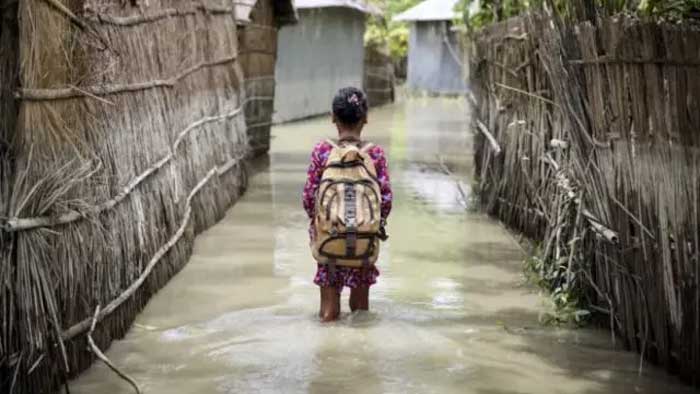
Children exposed to extreme heat and other climate-related stressors may lose up to 1.5 years of schooling, according to a global report warning that climate change is having a direct and deepening impact on education systems, particularly in low- and middle-income countries.
The new report — compiled by UNESCO’s Global Education Monitoring (GEM) team, the Monitoring and Evaluating Climate Communication and Education (MECCE) project, and the University of Saskatchewan — presents troubling evidence that extreme weather events and rising temperatures are undermining educational access, outcomes, and equity.
🔥 Heat Exposure Hurts Learning
The report links early-life exposure to high temperatures with significant reductions in educational attainment. An analysis of census and climate data across 29 countries (1969–2012) found that:
“A child exposed to temperatures two standard deviations above average is predicted to complete 1.5 fewer years of schooling than peers in average conditions.”
In China, high-stakes exam performance dropped during heatwaves, lowering high school graduation and college entrance rates. In the U.S., each 1°C increase in school-year temperatures (without air conditioning) was linked to a 1% drop in test scores, with African American and Hispanic students disproportionately affected due to poor school infrastructure — contributing to nearly 5% of the racial achievement gap.
🌍 Climate-Driven Disruptions Are Widespread
Climate change is already disrupting education across the globe:
-
Over the past two decades, schools were closed during 75% of extreme weather events affecting over 5 million people.
-
Most low- and middle-income nations now face annual school closures due to storms, floods, wildfires, or disease outbreaks — all climate-related.
-
In Brazil, students in heat-exposed, disadvantaged municipalities lose about 1% of learning each year due to rising temperatures.
⚠️ Marginalized Populations Bear the Brunt
The education impact of climate change is amplified for vulnerable groups:
-
Of the 33 countries facing extreme climate risk for children, 29 are also fragile states.
-
In the U.S., people with lower income or education are 15% more likely to live in areas with the highest increases in climate-related childhood asthma.
-
Schools serving socially vulnerable students are more likely to require federal disaster recovery funds after climate-related events.
🏫 Schools Struggling to Cope
Aging infrastructure is failing to meet the demands of a warming world:
-
Roughly half of U.S. public school districts need to upgrade or replace outdated heating, ventilation, and air conditioning (HVAC) systems.
-
In disaster-hit regions like Jakarta (2013 floods), schools were damaged, repurposed as shelters, or closed entirely — interrupting education for thousands.
However, the report also highlighted that disaster management plans helped mitigate disruptions. In Jakarta, 81% of schools with such plans said they were effective during emergencies.
Comments are closed.