
Quad Nations Rally Behind India, Condemn Pahalgam Terror Attack with Unified Voice

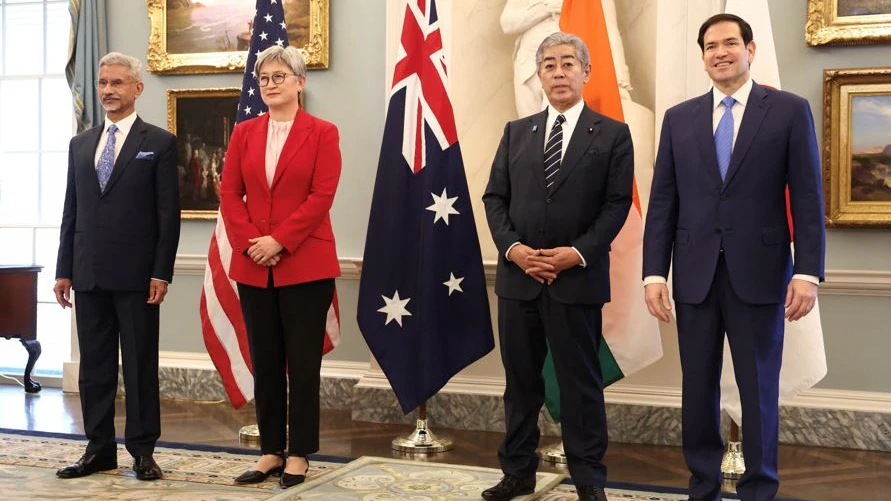
In a powerful display of diplomatic unity, the four-nation Quad grouping—comprising India, the United States, Japan, and Australia—issued a joint statement strongly condemning the recent terrorist attack in Pahalgam, Jammu and Kashmir. The coordinated message emphasized the group’s shared commitment to combating terrorism and reaffirmed solidarity with India during a period of national mourning and outrage.
Civilian Tragedy Sparks Global Condemnation
The terror attack in Pahalgam targeted a bus carrying civilians, including women and children, leaving multiple dead and dozens injured. Preliminary investigations point to the involvement of Pakistan-based terror outfits, continuing a pattern of cross-border militancy that India has long highlighted in international forums.
This attack marks one of the deadliest against civilians in the region in recent years, and it has reignited calls for a comprehensive and united global stance against terrorism.
Quad’s Joint Statement: A Clear Signal
Reacting swiftly, the Quad nations released a joint statement saying:
“The horrific attack on innocent civilians in Pahalgam has no justification. We stand in full solidarity with India and reaffirm our collective resolve to fight terrorism in all its forms.”
The statement not only condemned the violence but also called for the perpetrators to be brought to justice, signaling deeper cooperation in security and intelligence domains among the four democratic allies.
India’s Strategic Gains
For India, the unified statement represents more than symbolic support—it strengthens New Delhi’s long-standing push for the international community to acknowledge the roots and networks of terrorism operating against it. The Quad’s unequivocal backing underscores India’s role as a key security partner in the Indo-Pacific and lends moral and diplomatic weight to its counterterrorism campaign.
India’s Ministry of External Affairs expressed gratitude for the Quad’s prompt response, stating it reflects “shared democratic values and collective responsibility in confronting terror threats.”
Expanding the Quad’s Role
Traditionally focused on maritime security, trade, and regional stability in the Indo-Pacific, the Quad is now showing signs of evolving into a more comprehensive security platform. By taking a joint stance on terrorism, especially in South Asia, the group is expanding its influence in global security matters.
Areas of increased collaboration expected in the coming months include:
-
Enhanced intelligence sharing on terror threats
-
Joint cyber and counterterrorism training
-
Monitoring and dismantling of terror financing
-
Support for India’s initiatives at the UN against terror safe havens
Broader Geopolitical Implications
The timing of the statement is significant. As global power equations shift, and with increasing instability in regions like the Middle East and parts of Asia, terrorism continues to be a major disruptive force. The Quad’s message serves as a deterrent signal—not just to the perpetrators, but also to state actors that enable, fund, or shield extremist groups.
Furthermore, it showcases the group’s willingness to respond to security threats beyond the maritime domain, suggesting a broader and more flexible strategic framework.
The Quad’s joint condemnation of the Pahalgam terror attack marks a critical moment in international counterterrorism diplomacy. As India confronts the latest wave of violence on its soil, support from key global allies enhances both its moral standing and operational capability. In a world increasingly shaped by strategic partnerships, this unified voice against terror sends a message that such acts of violence will not be tolerated—and that democratic nations will stand together in the face of shared threats.
Comments are closed.