
MEA Explains Why India Refused to Sign Joint SCO Statement in China: Disagreement Over Terrorism Clause

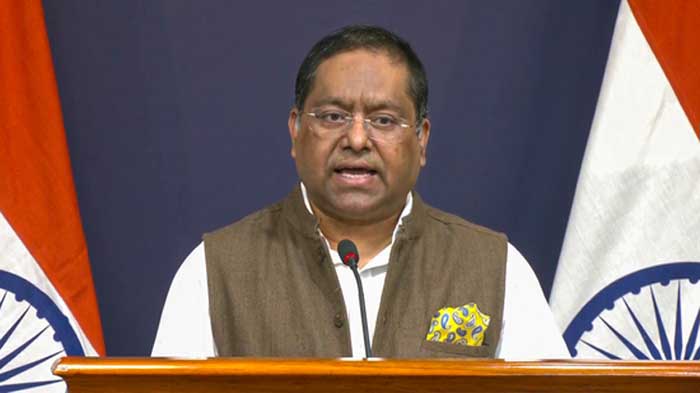
The Ministry of External Affairs (MEA) on Thursday confirmed that the Shanghai Cooperation Organisation (SCO) defence ministers’ meeting concluded without the adoption of a joint statement, citing a lack of consensus—particularly on the issue of terrorism.
MEA spokesperson Randhir Jaiswal stated that although India actively participated in the two-day meet, agreement on the joint communique remained elusive. “India strongly pushed for a clear reference to terrorism in the statement, but this was not acceptable to one particular country,” he said, without naming the nation.
Jaiswal added that Defence Minister Rajnath Singh had used his address at the summit to urge all SCO members to unite against terrorism in all its forms and manifestations. “He also stressed that perpetrators, organisers, financers, and sponsors of terrorist acts—including cross-border terrorism—must be held accountable,” Jaiswal said.
Rajnath Singh: SCO Must Tackle Terrorism, Cyber Threats, Hybrid Warfare
Addressing the SCO defence ministers’ meeting, Rajnath Singh highlighted the organisation’s global significance, noting that it represents roughly 30% of the world’s GDP and 40% of its population. He described regional peace and security as a collective responsibility essential for development and prosperity.
Singh warned of growing transnational challenges such as terrorism, cyberattacks, and hybrid warfare, and called for coordinated efforts to counter the misuse of advanced technologies by terror groups—including drones used for cross-border smuggling of weapons and narcotics.
He also emphasised the need to reform multilateral institutions and deepen international cooperation. “No country can face these threats alone. The foundation of a stable global order lies in collective effort and mutual benefit,” Singh said.
Comments are closed.