UAE’s Just Transition Work Programme Takes Center Stage at Bonn Climate Talks Amid Deep Divisions Over Trade and Finance

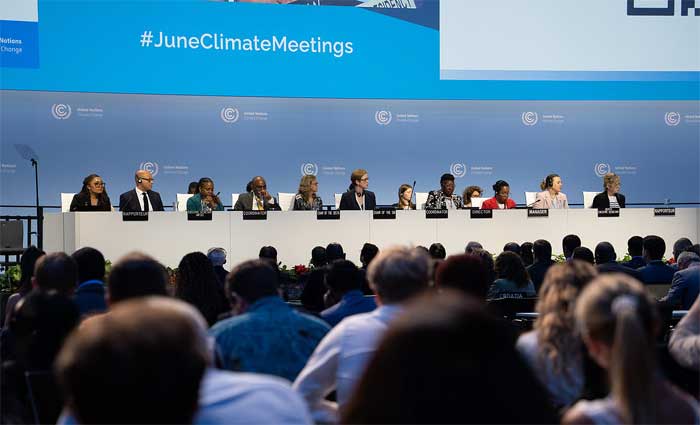
The United Arab Emirates’ Just Transition Work Programme (JTWP) has emerged as a central focus at the 62nd session of the Subsidiary Bodies (SB62), underway from June 16–26, 2025, in Bonn, Germany.
The initiative, shaped by its multisectoral and multidimensional approach to climate action, has become one of the most closely watched agenda items, with wide-ranging implications for global cooperation.
Originally launched at COP28 in the UAE, the JTWP is now undergoing crucial negotiations aimed at shaping a draft decision for adoption at COP30 in Belém, Brazil. While the programme has the potential to revive trust in multilateralism—dented after COP29’s weak outcome on the New Collective Quantified Goal (NCQG)—sharp disagreements have already surfaced, particularly over the controversial inclusion of Unilateral Trade Measures (UTMs).
Week One: Divergent Priorities Surface
During the first week of discussions, co-facilitators suggested using the COP29 presidency’s draft text as a foundation and proposed seven structural elements for the draft decision. These included contextualizing the UAE JTWP, integrating it within broader UNFCCC efforts, defining operational mechanisms, and enabling support for just transition strategies.
However, member countries emphasized vastly different priorities aligned with their own development needs:
-
African Group: Emphasized affordable energy access, clean cooking solutions, job creation, and international cooperation through technology and innovation.
-
Least Developed Countries (LDCs): Highlighted the importance of debt restructuring as a core component of just transition support.
-
G77 and China: Called for explicit inclusion of UTMs in the JTWP, arguing they obstruct poverty alleviation and sustainable development in the Global South. The bloc reiterated the principle of Common But Differentiated Responsibilities and Respective Capabilities (CBDR-RC), rejecting one-size-fits-all approaches.
-
Russia: The sole developed country opposing the inclusion of UTMs.
The Like-Minded Developing Countries (LMDC) bloc urged that just transition pathways remain nationally determined and referenced Article 9.1 of the Paris Agreement to emphasize the financial obligations of developed nations.
Developed Nations Focus on 1.5°C Target
Meanwhile, developed nations—led by the EU, UK, Australia, and Japan—insisted that just transitions be tightly linked to efforts to cap global warming at 1.5°C. This framing was supported by LDCs, Small Island Developing States (SIDS), and the Independent Association of Latin America and the Caribbean (AILAC).
These countries also recommended that just transition be embedded across key UNFCCC instruments such as Nationally Determined Contributions (NDCs), National Adaptation Plans (NAPs), and Long-Term Low Emission Development Strategies (LT-LEDS), from development through implementation.
What Lies Ahead?
By the end of the first week, discussions had progressed to proposing textual amendments to the JTWP draft—though these largely reflect entrenched positions rather than emerging consensus. Achieving a compromise ahead of COP30 will require renewed diplomatic efforts and genuine negotiation.
The most contentious points—particularly the role of UTMs and the scale and structure of financial flows from developed to developing countries—could ultimately determine the programme’s fate. As negotiations intensify, long-standing tensions over equity, historical responsibility, and economic disparity remain front and center, with the success of the JTWP hanging in the balance.
Comments are closed.