
PM Modi’s Language Choice at G7 Sparks Debate, But Critics Miss the Larger Message

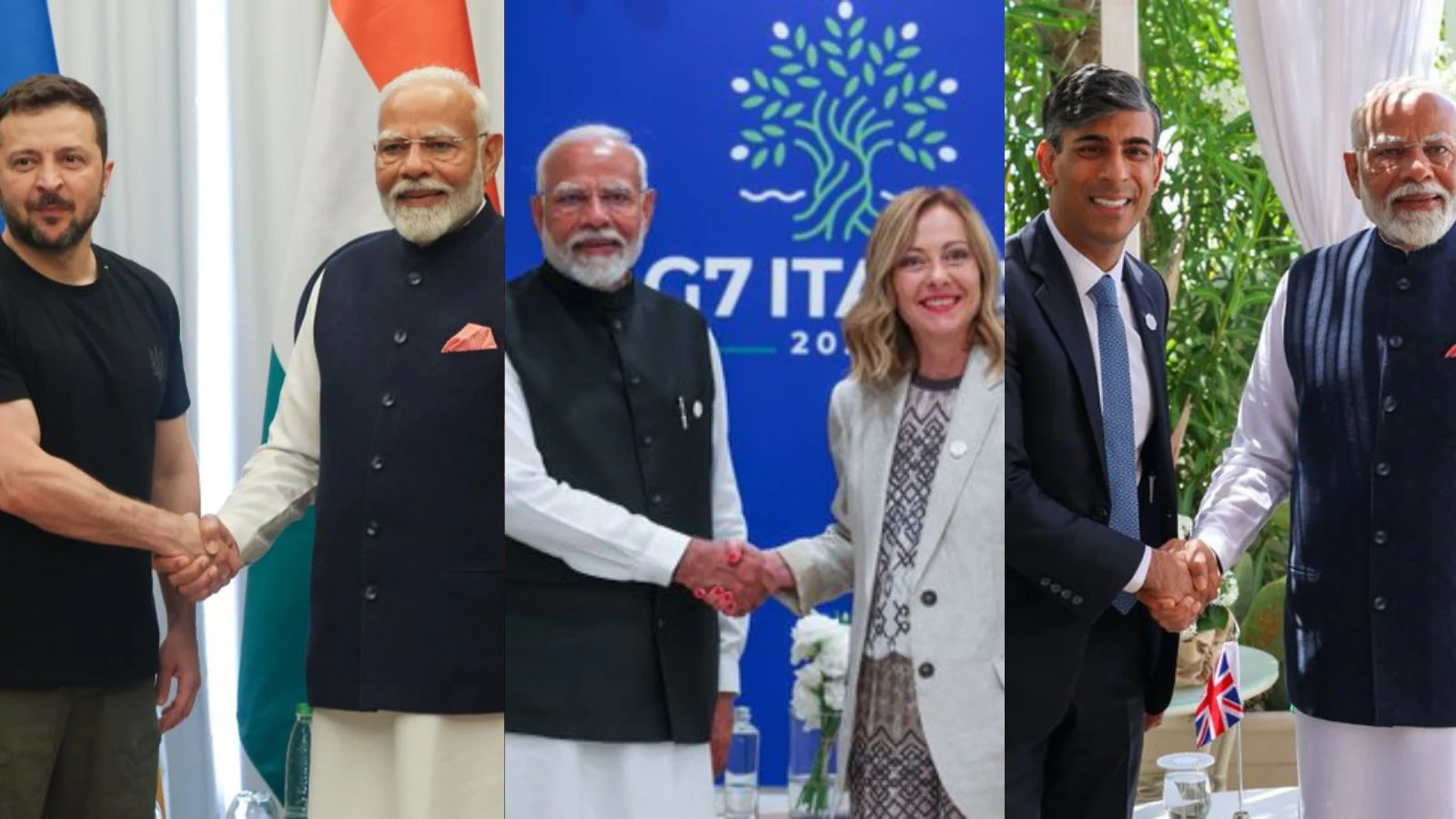
Prime Minister Narendra Modi’s recent participation at the G7 Summit in Canada generated headlines not for diplomatic breakthroughs or policy pronouncements, but for his choice of language during a bilateral meeting with French President Emmanuel Macron. While initially addressing the French leader in English, Modi transitioned into Hindi midway through the interaction. The moment, which would typically pass without comment in most global forums, quickly became the center of a political and social media firestorm.
Opposition leaders and a section of the online commentariat mocked the shift, implying that the Prime Minister’s switch from English to Hindi revealed a lack of fluency in the English language. This criticism, however, not only missed the broader context of international diplomacy but also overlooked the growing role of linguistic identity in India’s global engagement.
Political Reactions and Social Media Response
Critics were quick to seize on the incident, circulating edited clips of the exchange and alleging that the Prime Minister’s English proficiency was inadequate for global leadership. Some opposition figures framed it as an embarrassment on the international stage, while others used it to question the government’s emphasis on projecting India as a rising global power.
On social media, hashtags related to the incident trended briefly, with commentary ranging from light-hearted jokes to pointed political jabs. However, these reactions largely ignored the evolving dynamics of diplomatic language, national self-confidence, and cultural assertion.
The Larger Diplomatic Context
The Prime Minister’s use of Hindi in global forums is not unprecedented. Modi has long used his native language in major international addresses, including at the United Nations General Assembly. His choice often serves as a statement of cultural pride and linguistic sovereignty—a reflection of India’s multilingual identity and a symbol of resistance to outdated colonial-era expectations about English dominance in diplomacy.
Language in diplomacy is as much a matter of principle and symbolism as it is of convenience. Leaders of countries like France, Germany, China, Japan, and Russia routinely conduct bilateral meetings in their native tongues, supported by interpreters. Far from being a disadvantage, this approach reinforces their national identity and affirms the legitimacy of their languages in global discourse.
Hindi as a Tool of Cultural Diplomacy
By speaking in Hindi with world leaders, Prime Minister Modi projects an image of India that is unapologetically rooted in its civilizational heritage. This is consistent with the broader strategy of cultural diplomacy pursued by the government—emphasizing India’s language, traditions, and philosophical outlook as part of its soft power arsenal.
In his meeting with President Macron, the substance of the discussion—bilateral cooperation, strategic ties, and global challenges—was unaffected by the language used. The presence of professional interpreters ensured seamless communication. What should have been seen as a confident assertion of India’s linguistic plurality was instead reduced, in some circles, to a debate on English fluency.
The Political Undercurrent
The controversy also reveals deeper political and cultural tensions within India. English, often perceived as a marker of education and elitism, remains a politically sensitive subject. Any shift away from English in elite diplomatic spaces can trigger polarized reactions—either celebrated as nationalist pride or dismissed as provincialism.
Critics of the Prime Minister may view his use of Hindi as a populist gesture, but supporters argue it reflects a deliberate shift towards reshaping India’s post-colonial mindset and asserting its linguistic agency.
Prime Minister Narendra Modi’s decision to speak in Hindi during his bilateral meeting with President Emmanuel Macron at the G7 Summit should be seen in context—not as a linguistic misstep but as a conscious choice rooted in cultural confidence. In a world increasingly embracing diversity in diplomacy, language is not a barrier but a symbol. The real takeaway from the G7 should be India’s engagement with key global partners—not the language in which those discussions unfolded.
Comments are closed.