
Global Warming Threatens Major Crop Yields Despite Adaptation Efforts, Study Warns

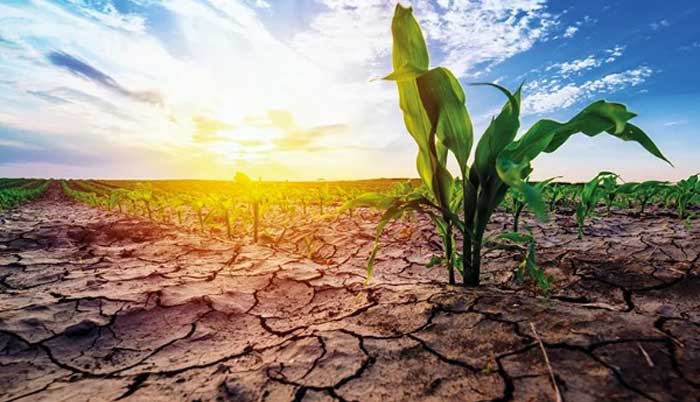
Rising global temperatures could drastically reduce food availability by the end of the century, even as farmers adapt, a new study suggests. Each 1°C of warming may cut per-person food supply by about 121 kilocalories daily — roughly the equivalent of losing a meal.
Under a 3°C warming scenario, which aligns with current trends, “that works out to giving up breakfast for everyone,” says lead author Andrew Hultgren of the University of Illinois Urbana-Champaign.
Hultgren’s team compiled one of the largest global datasets of high-resolution crop yields from 54 countries, focusing on the six staple crops that supply most of the world’s calories. They then analyzed how climate change and farmers’ adaptive strategies — like irrigation, fertilizer use, or crop switching — would affect yields.
The findings were stark: except for rice, which tolerates warmer nights, all crops are projected to suffer major losses. Global corn yields could decline 12% to 28% by 2100, depending on emission levels — even after accounting for adaptations and CO₂ fertilization effects.
“This tells us that adaptation can help, but it won’t be enough,” says Hultgren. “In a high-warming future, you start to wonder if the [US] corn belt is going to be the corn belt.”
Interestingly, the most significant projected losses are not in low-income nations, but in traditionally productive areas like the U.S. Midwest and Europe. “They’re not better adapted to it than poorer countries,” notes Harvard’s Wolfram Schlenker.
Michael Roberts of the University of Hawai’i at Manoa adds that while the results align with past regional studies, the uncertainties remain vast — especially concerning how the global food system might respond.
“The scary thing is, we just don’t know,” he says. “From minimal impact to catastrophic losses causing mass starvation — all scenarios are possible. That should be humbling.”
Comments are closed.