
Iran Strikes Soroka Hospital in Southern Israel; Netanyahu Vows to Make Tehran Pay ‘Heavy Price’

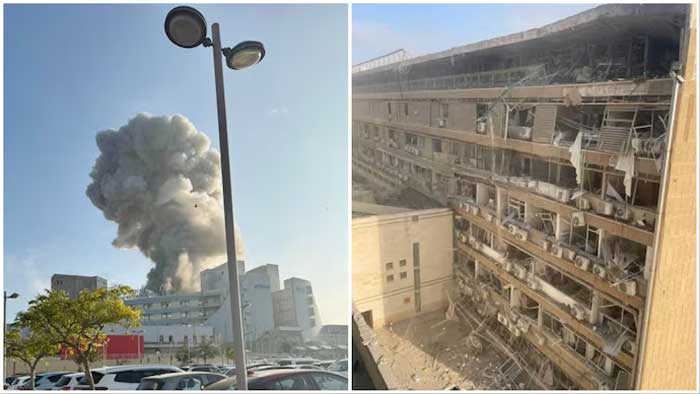
An Iranian ballistic missile struck the Soroka Medical Center in Beersheba, southern Israel, early Thursday, causing extensive damage and multiple injuries, according to an Israeli government spokesperson. In a strong response, Israeli Prime Minister Benjamin Netanyahu vowed to extract a “heavy price” from Iran for targeting a major civilian medical facility.
47 Injured as Missile Hits Largest Hospital in Southern Israel
At least 47 people were injured in the Iranian missile barrage across Israel, according to AFP, citing Israeli rescue officials. The Soroka Medical Center, which serves as the largest hospital in southern Israel, sustained direct impact, with visuals showing blown-out windows, thick black smoke, and chaotic scenes inside.
Footage released by Israel’s official ‘X’ (formerly Twitter) account showed hospital staff running through smoke-filled corridors, with glass shards, broken furniture, and debris scattered across the floors. In the video, patients and medical staff can be heard crying and shouting, underscoring the trauma caused by the strike.
“The Iranian regime targeted Soroka Hospital in Beersheba with a ballistic missile—hitting a major medical center. We will not stand by. We will continue doing what must be done to defend our people,” posted Israel’s official ‘State of Israel’ account.
Netanyahu Condemns Attack as ‘Act of Terror’
Prime Minister Netanyahu strongly condemned the strike, stating:
“This morning, Iran’s terrorist tyrants launched missiles at Soroka Hospital in Beersheba and at civilian areas in central Israel.”
Other Iranian missiles reportedly struck a residential high-rise in Tel Aviv, where a local hospital later received 16 wounded individuals, including three in critical condition, according to Reuters.
Soroka Hospital: A Lifeline in Israel’s South
With more than 1,000 beds, Soroka Medical Center serves nearly 1 million residents in the southern region of Israel, including those in the Negev Desert and surrounding areas.
Following rising tensions in the region, hospitals across Israel had already activated emergency protocols, including:
-
Relocating vulnerable patients, such as those on ventilators, to protected underground spaces.
-
Converting underground parking facilities into emergency treatment wards to shield patients and staff from missile strikes.
Escalating Conflict Between Israel and Iran
The missile attack came hours after Israel reportedly carried out airstrikes on Iran’s Arak heavy water nuclear reactor, further intensifying a week-long conflict that began with Israel’s air campaign targeting Iranian military infrastructure, nuclear experts, and senior commanders.
In retaliation, Iran has launched hundreds of missiles and drones toward Israel. While Israel’s multi-layered air defense systems have intercepted many of these projectiles, officials acknowledge that gaps remain, particularly when dealing with simultaneous barrages targeting civilian or strategic locations.
Comments are closed.