
PM Modi Meets Japan’s Shigeru Ishiba at G7 Summit, Vows to Deepen Bilateral Ties

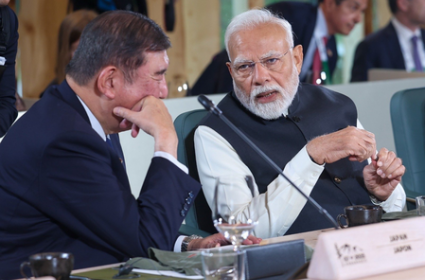
Indian Prime Minister Narendra Modi met his Japanese counterpart Prime Minister Shigeru Ishiba on the sidelines of the G7 Summit on Tuesday, in a meeting that reaffirmed the strong strategic partnership between India and Japan. The two leaders expressed mutual commitment to deepen bilateral cooperation across multiple sectors, including trade, technology, defense, infrastructure, and Indo-Pacific security.
The high-level meeting between the two Asian powers took place against the backdrop of global geopolitical shifts and a growing emphasis on strengthening like-minded democracies. Both Modi and Ishiba emphasized the shared values of democracy, rule of law, and a free and open Indo-Pacific as the cornerstones of India-Japan relations.
Key Areas of Cooperation Discussed
According to officials familiar with the meeting, the two leaders discussed strengthening cooperation in five major areas:
-
Economic and Trade Collaboration
PM Modi and PM Ishiba reviewed ongoing efforts to enhance bilateral trade and investment. With Japan being one of India’s largest foreign investors, both sides agreed to work towards streamlining regulatory frameworks and accelerating joint ventures in sectors such as manufacturing, clean energy, and electronics. -
Defense and Security
In light of rising regional tensions in East and South Asia, the leaders emphasized enhancing defense cooperation, including joint military exercises, maritime security, and intelligence sharing. India and Japan reiterated their commitment to a rules-based order in the Indo-Pacific. -
Technology and Innovation
The leaders explored new opportunities for collaboration in semiconductor manufacturing, AI, and digital infrastructure. Japan’s advanced technology and India’s growing digital economy were highlighted as complementary assets in building future-ready industries. -
Infrastructure Development
Both sides welcomed ongoing projects under the India-Japan Industrial Corridor and discussed future plans for infrastructure development, particularly in North-East India and Southeast Asia, to enhance connectivity and regional integration. -
Climate and Sustainability
As climate change remains a global priority, Modi and Ishiba agreed to accelerate cooperation on green hydrogen, renewable energy, and sustainable development, in line with their respective national goals.
Symbol of Asia’s Democratic Cooperation
The Modi-Ishiba meeting is seen as symbolic of the growing synergy between Asia’s two largest democracies. With China’s assertiveness continuing to dominate regional security concerns, India and Japan’s evolving partnership is being viewed as a stabilizing force in the Indo-Pacific.
Both leaders stressed the importance of multilateral cooperation, not only through bilateral channels but also via platforms like the Quad (India, Japan, U.S., Australia), G20, and the United Nations.
Statements from the Leaders
Prime Minister Modi tweeted after the meeting:
“Delighted to meet PM Shigeru Ishiba. India-Japan ties are rooted in mutual respect and a shared vision for peace and prosperity in the Indo-Pacific. We are committed to advancing our partnership in key strategic areas.”
Prime Minister Ishiba, who assumed office earlier this year, responded by calling India “a vital partner in shaping a secure, resilient, and innovation-driven future for Asia and the world.”
As both nations look to navigate an increasingly complex international environment, the Modi-Ishiba meeting at the G7 Summit marks a clear intention to intensify bilateral ties and expand their strategic footprint. With shared goals in security, technology, and sustainable development, the India-Japan partnership is poised to play a crucial role in shaping the future of the Indo-Pacific region and beyond.
Comments are closed.