
98-ft Tsunami, 1.99 Lakh Deaths: What Triggered Japan’s Rare ‘Megaquake’ Advisory

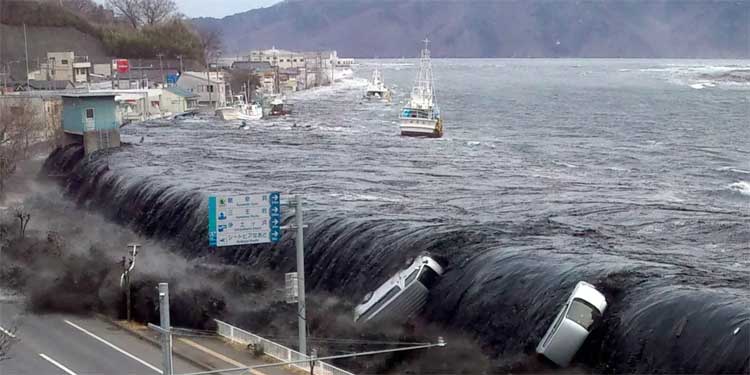
Japan issued a rare “megaquake advisory” on Tuesday after a magnitude 7.5 earthquake struck off the eastern coast of Aomori, just south of Hokkaido. The quake caused only minor damage and 34 mostly mild injuries, but authorities warned that it has temporarily increased the risk of a much larger seismic event in the region.
Officials emphasised that the advisory is not a prediction, noting that the probability of a magnitude 8 or stronger quake remains low—around 1%, according to the Associated Press. The alert is meant to promote preparedness, evoking memories of the 2011 disaster that killed nearly 20,000 people and triggered the Fukushima nuclear meltdown.
Heightened Risk in Northern Japan
Japan’s Meteorological Agency (JMA) said the tremor raised seismic stress along the Hokkaido–Sanriku coast, where the Pacific Plate dives beneath Japan, forming the Japan Trench and Chishima Trench—zones responsible for some of the country’s most destructive earthquakes.
Experts note that the 2011 magnitude 9.0 earthquake, which generated a catastrophic tsunami, originated in the same trench system. That event was preceded two days earlier by a magnitude 7.3 foreshock, mirroring the pattern observed this week.
The 2011 tsunami reached 15 metres (50 feet) in several areas, devastated communities across Iwate, Miyagi, and Fukushima, and caused the Fukushima Daiichi nuclear disaster, leaving lingering concerns over radiation exposure.
What a Future Megaquake Could Bring
Government models warn that another major offshore quake in the Hokkaido–Sanriku region could unleash a 30-metre (98-foot) tsunami, kill up to 199,000 people, destroy 220,000 buildings, and result in nearly 31 trillion yen ($198 billion) in economic damage.
If such a disaster occurred during winter, as many as 42,000 people could suffer hypothermia while evacuating.
Tuesday’s advisory spans 182 municipalities from Hokkaido to Chiba Prefecture—one of the most extensive alerts issued in recent years.
Sharper Guidance Than 2024’s Controversial Alert
Officials noted that this week’s advisory is far more specific than the broad Nankai Trough megaquake advisory issued in 2024, which sparked public anxiety, panic buying, and widespread event cancellations across southern Japan due to its unclear messaging.
The current alert is designed to be more targeted and grounded in observable seismic data. Authorities are urging residents in coastal areas to stay alert, keep emergency supplies ready, and evacuate immediately if instructed.
Comments are closed.