
30 Viking Age Graves Unearthed in Denmark May Belong to Elite Loyal to King Harald Bluetooth

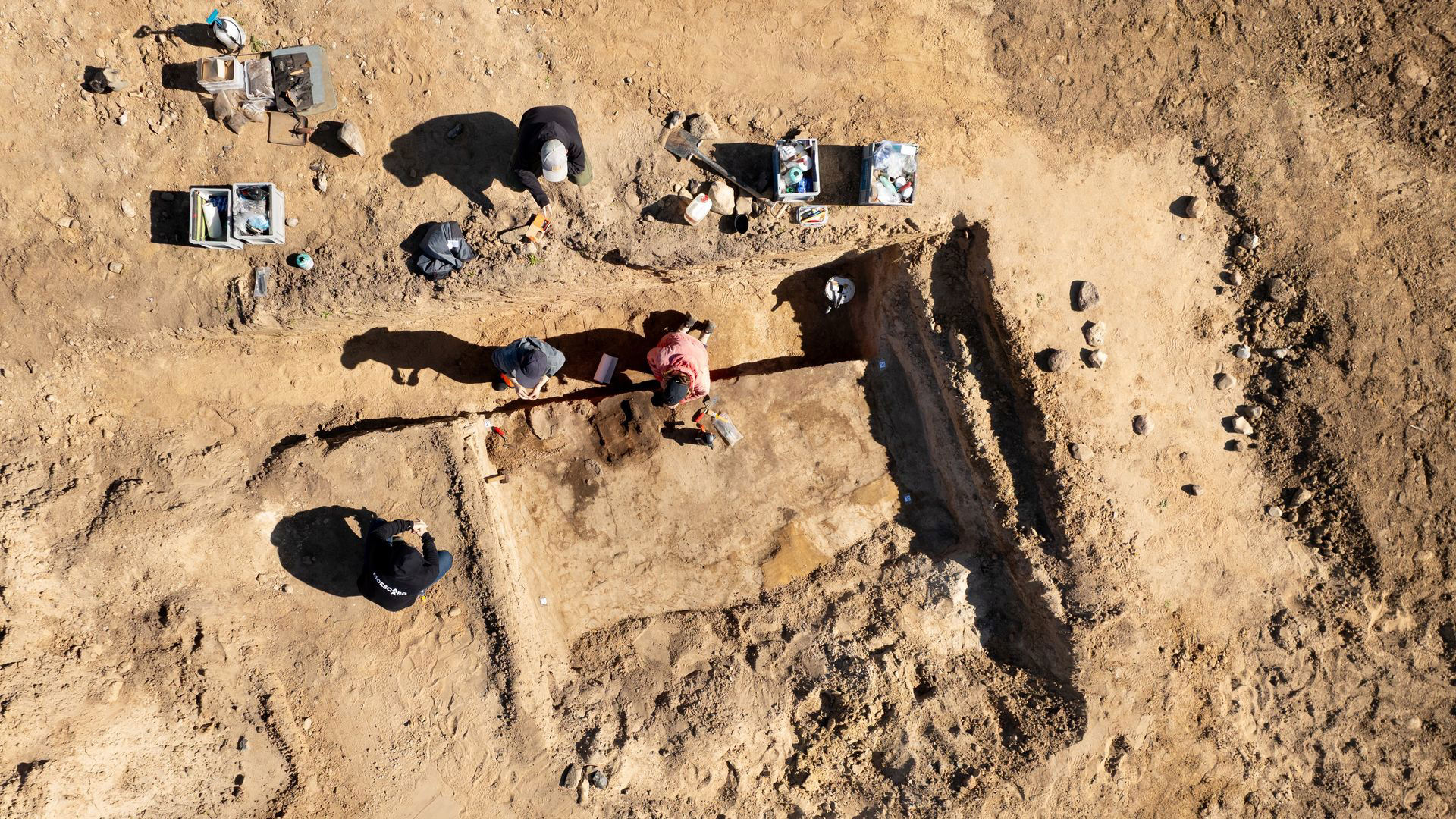
In a discovery of immense historical significance, archaeologists in Denmark have uncovered 30 Viking Age graves, believed to be the final resting places of an elite family connected to King Harald Bluetooth, the 10th-century ruler famed for uniting Denmark and parts of Norway.
The excavation, led by Moesgaard Museum, revealed graves that date back to the Viking Age and contain a wealth of grave goods, including coins, pearls, and ceramics—clear indicators of high social status during the time of Harald Bluetooth’s reign.
A Window Into 10th-Century Norse Society
According to the museum’s translated statement, the burial site likely held members of a prominent local family, possibly retainers or administrators loyal to the royal court of Harald Bluetooth. The graves are believed to have belonged to people with military, religious, or administrative roles in Viking society.
“These were not ordinary farmers or warriors. The artifacts and burial arrangements suggest they belonged to a class of people close to the royal power structure,” said one of the archaeologists involved in the dig.
Remarkable Artifacts Unearthed
Among the most striking finds were:
-
Coins believed to be minted during or around Harald Bluetooth’s reign
-
Glass pearls and beads, some of which may have originated from trade routes extending into the Middle East or Byzantium
-
Ceramic vessels with intricate designs, rarely seen in standard Viking-era burials
These findings reinforce the image of the Viking elite as cosmopolitan and well-connected, engaging in far-reaching trade, diplomacy, and cultural exchange.
Harald Bluetooth: A Legacy Cast in Stone and Signal
King Harald “Bluetooth” Gormsson ruled Denmark and parts of Norway in the late 10th century. He is credited with the unification and Christianization of Denmark, and his name lives on in modern technology—the Bluetooth wireless standard—named in his honor for his role in connecting different peoples.
The discovery of graves possibly tied to his court offers new insight into the social hierarchy and burial customs of Viking nobility, especially during a pivotal period in Scandinavia’s transition from paganism to Christianity.
Future Research and Preservation
Moesgaard Museum has confirmed that further analysis is underway to understand the genetic makeup, health status, and possible kinship between those buried. The excavation team is also mapping the layout of the burial ground to determine if it was part of a larger Viking settlement or religious complex.
This find is being hailed as one of the most important Viking-era discoveries in Denmark in recent years, with the potential to reshape historical understanding of power and society during Harald Bluetooth’s reign.
Comments are closed.