
25 Years After Landmark UN Resolution, New Report Warns Women Are Being Shut Out of Peace Processes

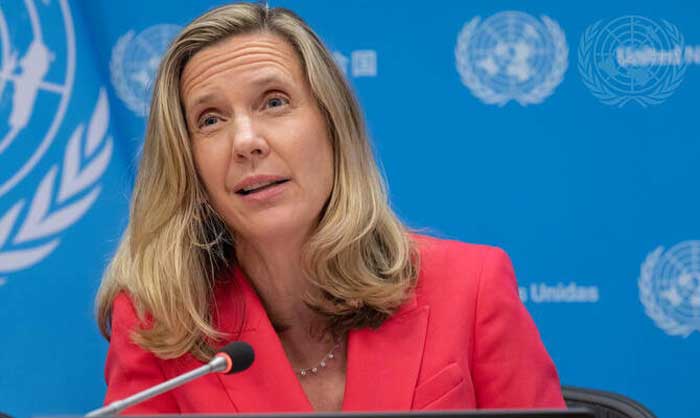
Twenty-five years after the adoption of UN Security Council Resolution 1325 — a landmark commitment to include women in peace and security efforts — a new UN report paints a grim picture of backsliding and exclusion.
As global military spending soars and armed conflicts intensify, women are increasingly being excluded from peace negotiations, the report finds.
“Despite the promise and engagement around Resolution 1325, military spending is at record levels, gender equality is under attack, and multilateralism is weakening,” said Nyaradzayi Gumbonzvanda, deputy executive director of UN Women.
Last year, 87 percent of peace talks took place without a single woman at the table, even as the world witnessed more conflicts than at any time since World War II — with devastating impacts on women and girls.
According to the report, nearly 700 million women and girls now live within 50 kilometers of armed conflict, the highest number since the 1990s. Civilian casualties among women and children have quadrupled in the past two years, while conflict-related sexual violence has risen by 87 percent.
“Women and children are called ‘collateral damage’ — but it is death and suffering,” Gumbonzvanda said. “We are seeing more wars today than at any time since 1946.”
Despite evidence that women’s participation makes peace processes more durable, their representation remains minimal: only 7 percent of negotiators and 14 percent of mediators in 2024 were women.
“This exclusion at the table translates to exclusion in governance and power long after conflict ends,” said Sarah Hendriks, UN Women’s Director of Programme and Policy. “The world is still choosing war over women — and women are paying the price.”
In conflict-affected countries, women hold just 18 percent of local government seats, roughly half the global average. In Gaza, Hendriks noted, women and girls have been killed at a rate of two per hour over the past two years.
The report also highlights the severe impact of conflict on women’s health and livelihoods: 58 percent of global maternal deaths now occur in 29 crisis-affected countries, and funding for women-led organizations — key actors in peacebuilding — is drying up. Only 0.4 percent of aid to conflict-affected countries reaches such groups directly, and nearly half of them say they may shut down within six months.
Meanwhile, the UN Peacebuilding Fund’s budget has been cut almost in half, as donor priorities shift toward militarization. “Women-led networks that reduce violence are being left without support,” Hendriks warned. “If these trends continue, we risk erasing two decades of progress.”
UN Women is calling for binding targets for women’s participation in peace processes, at least 1 percent of donor aid to go directly to women’s organizations during crises, and a redirection of resources from arms to peacebuilding.
Global military expenditure now stands at $2.7 trillion — nine times what would be needed to provide universal social protection for women and girls in the world’s poorest countries.
“The heart of the Women, Peace and Security agenda is not about making war safer for women and girls,” Hendriks said. “It is about ending wars once and for all.”
Gumbonzvanda stressed that women’s experiences of war vary widely — from refugees and widows to those living near landmines or providing care under fire — and must not be reduced to a single narrative.
She also underscored the importance of shared learning: “Land-rights issues in Latin America can inform policies in Southern Africa. The strength of Resolution 1325 lies in its global scope and collective learning.”
One in four governments now cite backlash against gender equality as a major obstacle to progress. UN Women estimates that 151 million women and girls could be pushed into extreme poverty by 2030, with those in conflict zones 7.7 times more likely to face the most extreme deprivation.
As the UN marks the 25th anniversary of Resolution 1325 and 30 years since the Beijing Platform for Action, UN Women says this must be a turning point.
“Resolution 1325 remains one of the most celebrated milestones for the women’s peace movement,” Gumbonzvanda said. “But 25 years on, women are still shut out of decisions on war and peace. That must change.”
Comments are closed.