
2025 Among Hottest Years on Record as Human-Driven Climate Change Pushes World Past Key Warming Threshold

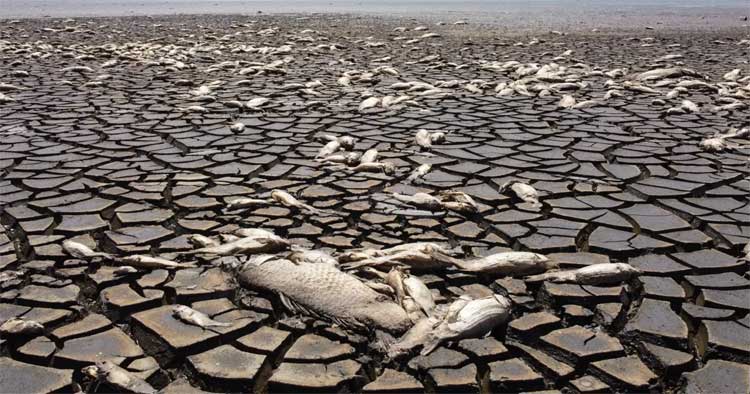
Climate change intensified by human activity made 2025 one of the three hottest years ever recorded, scientists said, warning that the world is now breaching a critical global warming limit set under the Paris Agreement.
According to a new analysis by World Weather Attribution (WWA) researchers released on Tuesday, the average global temperature over the past three years has crossed the 1.5 degrees Celsius threshold above pre-industrial levels for the first time. Scientists say staying below this limit could have significantly reduced loss of life and prevented severe environmental damage worldwide.
The findings come after a year marked by devastating climate extremes across continents, despite the presence of La Niña — a natural cooling phenomenon in the Pacific Ocean that typically tempers global temperatures. Researchers attributed the sustained heat primarily to continued burning of fossil fuels such as coal, oil and gas, which release heat-trapping greenhouse gases into the atmosphere.
“If we don’t stop burning fossil fuels very, very quickly, it will be very hard to keep that goal,” said Friederike Otto, co-founder of World Weather Attribution and a climate scientist at Imperial College London. “The science is increasingly clear.”
Deadly extremes across the globe
Extreme weather events linked to climate change killed thousands of people and caused billions of dollars in damage in 2025, the report said. WWA scientists identified 157 extreme events that met severe impact criteria, such as causing over 100 deaths or prompting states of emergency. Of these, 22 were closely analysed.
Heatwaves emerged as the deadliest climate events of the year. Some of the heatwaves studied were found to be ten times more likely due to human-induced climate change compared to a decade ago.
“The heatwaves we have observed this year are quite common events in our climate today, but they would have been almost impossible without human-induced climate change,” Otto said. “It makes a huge difference.”
Elsewhere, prolonged drought fuelled wildfires in Greece and Turkey, while torrential rains and flooding in Mexico killed dozens and left many missing. Super Typhoon Fung-wong forced more than a million evacuations in the Philippines, and intense monsoon rains triggered floods and landslides across India.
Limits to adaptation
The WWA warned that the growing frequency and intensity of climate extremes are pushing many regions beyond their ability to adapt. The report cited Hurricane Melissa as an example, noting that the storm intensified so rapidly that forecasting and preparedness were severely hampered, leaving Jamaica, Cuba and Haiti struggling to cope with the destruction.
Scientists referred to this growing challenge as reaching the “limits of adaptation,” where communities lack sufficient time, resources or warning systems to respond effectively.
Policy gaps and global divide
Despite mounting evidence, global political action remains uneven. The United Nations climate talks held in Brazil in November ended without a concrete plan to phase out fossil fuels. While additional funding was pledged to help vulnerable countries adapt, experts said implementation would take time.
Many scientists now concede that global warming will temporarily overshoot the 1.5-degree Celsius target, though some believe the trend could still be reversed with aggressive action.
Progress varies sharply by country. China has rapidly expanded solar and wind power but continues investing in coal. In Europe, rising climate disasters have increased pressure for action, though economic concerns persist. In the United States, the Trump administration has shifted away from clean energy policies in favour of supporting coal, oil and gas.
“The geopolitical weather is very cloudy this year,” Otto said. “Many policymakers are clearly acting in the interests of the fossil fuel industry rather than their populations.”
Andrew Kruczkiewicz, a senior researcher at Columbia University’s Climate School, said climate risks are becoming more complex and unpredictable.
“Places are seeing disasters they aren’t used to, events are intensifying faster, and they’re becoming harder to manage,” he said. “Progress is being made globally, but we must do more.”
Comments are closed.