
10 Indian Valleys That Look Unreal in Spring—From Rhododendron Carpets to Alpine Flower Seas

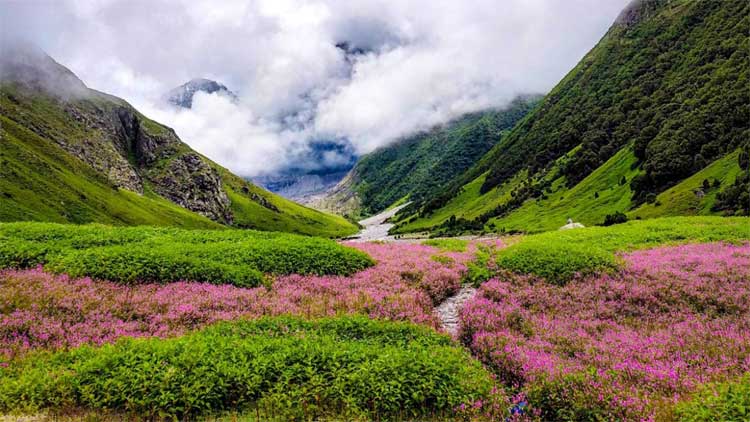
Spring in India isn’t just about mild weather or flowers blooming in city gardens. It’s the season when entire valleys transform into living artworks. Mountain slopes turn crimson with rhododendrons. Alpine meadows erupt in orchids, poppies and primulas. Rivers slice through landscapes so vivid they almost seem unreal.
While Switzerland or the Netherlands often dominate conversations about flower-filled landscapes, India quietly hosts some of the world’s most breathtaking spring valleys. From Uttarakhand and Sikkim to Nagaland, Kashmir and Ladakh, these regions come alive for a few fleeting weeks each year, when snow retreats and alpine ecosystems burst into colour.
Some of these valleys are protected sanctuaries known for decades. Others remain largely unexplored, visited only by trekkers and serious nature lovers. What they all share is this: when spring arrives, they stop looking like real places and start looking like scenes imagined by an overly optimistic painter.
Here are 10 Indian valleys that look absolutely unreal in spring.
1. Valley of Flowers, Uttarakhand
The original—and still the most iconic
A UNESCO World Heritage Site in Chamoli district, the Valley of Flowers sits at around 3,600 metres and spans 87 square kilometres. From July to September, the meadow becomes a botanical spectacle, with over 500 species of alpine flowers including Himalayan blue poppies, Brahmakamal, cobra lilies, primulas and daisies. Located within the Nanda Devi Biosphere Reserve, it’s also home to rare wildlife such as musk deer and Asiatic black bears.
Best time: Late July to mid-August for peak bloom
2. Yumthang Valley, Sikkim
A rhododendron rainbow in the north
Often called Sikkim’s Valley of Flowers, Yumthang lies at 3,564 metres in North Sikkim. Spring transforms the valley into a riot of reds, pinks, whites and purples as 24 species of rhododendrons bloom inside the Shingba Rhododendron Sanctuary. Snow-capped peaks, grazing yaks and hot springs add to the surreal beauty.
Best time: April–May for peak rhododendron bloom
3. Dzukou Valley, Nagaland–Manipur Border
The hidden jewel of the Northeast
Perched at 2,400 metres, Dzukou Valley is famed for the rare Dzukou lily, found nowhere else in the world. During summer, rolling green hills are dotted with pink-white flowers, rhododendrons and aconitums. The valley’s isolation only adds to its dreamlike charm.
Best time: July–August for Dzukou lilies
4. Gurez Valley, Kashmir
A quiet spring paradise
Located near the Line of Control in north Kashmir, Gurez Valley sits at about 2,400 metres. In spring, its meadows bloom with wildflowers like tulips, irises and daisies, while the Kishanganga River winds through the landscape. Far less crowded than mainstream Kashmir destinations, Gurez feels raw and untouched.
Best time: June–July for wildflowers
5. Chopta–Tungnath, Uttarakhand
The ‘Mini Switzerland’ of India
At 2,680 metres, Chopta and the trail to Tungnath—home to the world’s highest Shiva temple—burst into colour during spring. Rhododendrons, primulas and alpine flowers line the path, with dramatic views of Chaukhamba and Nanda Devi in the background.
Best time: April–June
6. Sangla Valley, Himachal Pradesh
Apple blossoms and alpine meadows
Set along the Baspa River in Kinnaur, Sangla Valley blooms with apple and cherry blossoms in spring. Wildflowers blanket meadows, traditional Kinnauri villages dot the slopes, and snow peaks loom overhead, creating a postcard-perfect setting.
Best time: April–June
7. Araku Valley, Andhra Pradesh
Eastern Ghats in bloom
At just 1,300 metres, Araku offers a gentler spring experience. Coffee plantations burst into white blossoms, wildflowers fill the hills, and waterfalls come alive. Tribal culture, caves and a spectacular train journey make it one of the most accessible flower valleys in India.
Best time: March–April
8. Dzongu Valley, North Sikkim
A sacred land of orchids
A restricted region reserved for the Lepcha tribe, Dzongu Valley blooms with orchids, rhododendrons and medicinal plants during spring. Pristine forests, sacred rivers and traditional villages make it as culturally rich as it is beautiful.
Best time: March–May
9. Spiti Valley, Himachal Pradesh
A cold desert that surprises
Spiti’s stark, high-altitude terrain doesn’t suggest flowers—but in late spring, tiny wild blooms like poppies and edelweiss appear across the landscape. Against barren mountains and turquoise rivers, these delicate flowers create an almost alien beauty.
Best time: Late May–June
10. Nubra Valley, Ladakh
Flowers amid sand dunes
Known for its sand dunes and Bactrian camels, Nubra Valley surprises visitors in spring with wildflowers and apricot blossoms. The contrast of flowers, desert terrain and snow-covered peaks is unlike anything else in India.
Best time: May–June
Why India’s Spring Valleys Matter
These valleys aren’t just scenic destinations. They are fragile ecosystems that bloom briefly, whether anyone is watching or not. Standing in a high-altitude meadow surrounded by nameless flowers, snow peaks above and rivers below, you realise that beauty doesn’t need to perform—it simply exists.
From the botanical richness of the Valley of Flowers to Yumthang’s rhododendron seas and Dzukou’s quiet magic, each valley offers something rare and fleeting. Some demand permits and strenuous treks; others are reachable by road. All demand respect—for nature, local communities and the delicate balance that allows these landscapes to bloom.
Spring doesn’t last forever. And neither does this kind of beauty.
Comments are closed.