
1.5°C breached: What permanent global warming at this level could mean for India

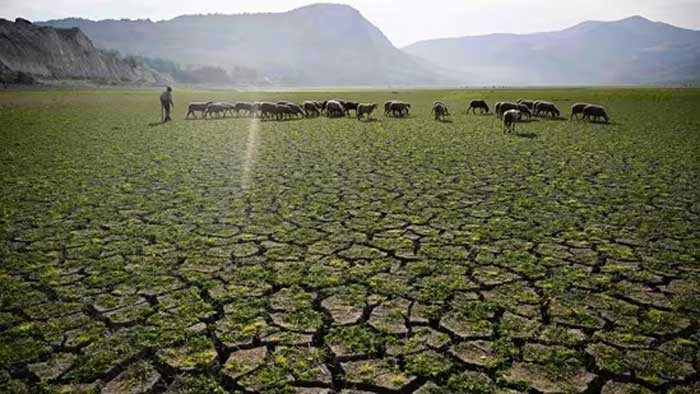
There is one number that looms over every climate summit, government pledge and scientific warning: 1.5°C. That is the limit the world set under the Paris Agreement in 2015 — the maximum global temperature rise above pre-industrial levels that scientists believed could prevent the worst impacts of climate change.
Crossing that threshold does not mean instant catastrophe, but it marks a dangerous turning point. For vulnerable regions such as India and island nations like Vanuatu, it signals a future of intensifying climate shocks.
For the first time, that line has been crossed in a single year.
Global temperatures in 2024 averaged 1.55°C above pre-industrial levels, making it the hottest year on record. In India, the impact was visible across the country, which experienced extreme weather on 314 of the 365 days of the year — from heatwaves and floods to cyclones and droughts.
Scientists caution that the 1.5°C target is measured over decades, not a single year. However, the trajectory is clear. And for India’s 1.4 billion people, the pressing question is what happens if the world permanently crosses that threshold.
How much hotter could India’s summers get?
The warning signs are already visible.
India recorded extreme weather on 88% of days in 2024, while temperatures in New Delhi touched 49.9°C, the highest ever recorded in the capital. Heatwaves also arrived nearly three weeks earlier than the previous year.
If global warming stabilises at 1.5°C, the consequences could be severe. Studies suggest annual heat-related deaths in India could increase 25-fold by 2100, potentially reaching more than 1.5 million deaths per year under the worst scenarios.
The economic toll is already emerging. Research shows that a single degree of warming reduces the daily earnings of informal workers in Delhi by around 16%, while incomes can drop by up to 40% during heatwaves. For millions of workers such as street vendors, construction labourers and laundry workers, extreme heat directly affects their ability to earn.
What will happen to the monsoon?
India’s agriculture and water supply depend heavily on the Indian summer monsoon. But warming temperatures are already changing its behaviour.
A 2025 study published in PLOS Climate found that average monsoon rainfall over the Indo-Gangetic plains has declined by 0.5 to 1.5 mm per day per decade since 1951.
Yet the biggest risk is not simply less rainfall — it is unpredictable rainfall.
At 1.5°C of warming, the monsoon is projected to arrive around seven days earlier and become more erratic and uneven across regions. This could mean long dry spells punctuated by intense bursts of rain.
Such extremes increase the risk of devastating floods, crop losses and infrastructure damage. Coastal regions such as Gujarat are already seeing a steady rise in extreme rainfall events.
Will food production suffer?
India’s food system relies heavily on two crops: wheat and rice. Both are highly sensitive to temperature changes.
Research suggests wheat yields in India could fall by 6–25% by 2100, while irrigated rice yields may decline by 7% by 2050 and around 10% by 2080.
Wheat is particularly vulnerable. For every 1°C increase in average growing-season temperature, yields decline by roughly 7%.
The most critical stage is the grain-filling phase, when temperatures above 35°C can trigger early ripening and reduce productivity. At 1.5°C of global warming, many wheat-growing regions could face exactly these conditions.
What about India’s rivers and glaciers?
The glaciers of the Hindu Kush Himalaya act as a water tower for South Asia. They feed major rivers such as the Ganges, Brahmaputra, Yamuna and Indus — lifelines for hundreds of millions of people.
But the region is warming rapidly. Temperatures there have risen about 0.28°C per decade since 1950, almost twice the global average.
At 1.5°C of global warming, scientists estimate that one-third of Himalayan glaciers could disappear by 2100. At 2°C, losses could reach 50%, and at 3°C — a scenario the world is currently heading toward — the Eastern Himalayas could lose up to 75% of their ice.
In the short term, faster melting creates dangerous glacial lakes that can burst suddenly. In 2023, the bursting of the Lhonak Lake in Sikkim triggered a catastrophic flood that killed more than 200 people and destroyed a hydropower dam.
Over the longer term, reduced glacier mass could mean lower river flows, threatening water supplies for millions.
Could climate change force millions to move?
All these factors — extreme heat, erratic rainfall, crop failures and melting glaciers — ultimately lead to one major outcome: displacement.
According to the Internal Displacement Monitoring Centre, India recorded 5.4 million internal displacements due to climate disasters in 2024, the highest in South Asia.
Around 14 million Indians have already been displaced by climate-related events, and that number could rise sharply if warming continues.
By 2050, climate change could significantly affect the living standards of nearly half of India’s population and push around 50 million people back into poverty.
The burden will fall most heavily on those least responsible for the crisis: small farmers in the Indo-Gangetic plains, coastal fishing communities in Odisha and Tamil Nadu, and millions of informal workers whose livelihoods are highly sensitive to weather extremes.
A crisis India did not create
India’s emissions remain relatively low compared with many major economies. The country produces roughly 3 tonnes of CO₂ per person annually, far lower than about 15 tonnes in the United States, 12 tonnes in Australia, or 8 tonnes in China.
Yet geography, population density and economic vulnerability place India squarely in the path of climate risks.
For India, the 1.5°C threshold is not an abstract number in climate negotiations. It translates into failed harvests, shrinking water supplies, flooded homes and longer, more dangerous summers.
And the window to prevent that future is narrowing rapidly.
Comments are closed, but trackbacks and pingbacks are open.